
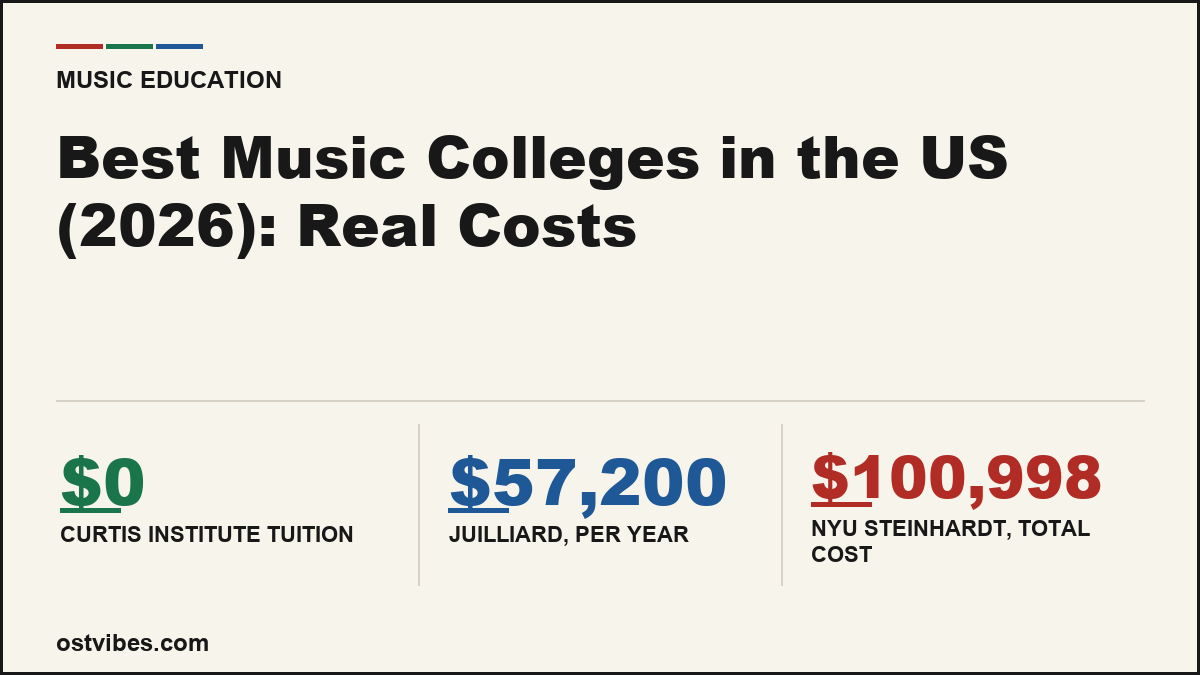
Tuition at America’s top music schools now runs from $0 to $75,384 a year. The zero belongs to the Curtis Institute of Music in Philadelphia, which has covered full tuition for every student since 1928. The $75,384 belongs to USC Thornton in Los Angeles — and that is before housing, fees, or the extra $1,400 music majors pay each year for private lessons.
Once housing and food are added, the official annual cost at USC and NYU passes $100,000. This guide compares eight of the best music colleges in the US using 2026-27 figures published by the schools themselves, plus federal admissions data. Third-party sites often carry outdated numbers, so every figure here comes from an official source.
2026-27 costs at a glance
Here are all eight schools, ordered from lowest to highest tuition. “Cost of attendance” means a school’s estimate of everything a year costs: tuition, fees, housing, food, and sometimes books and personal spending.
| School | Known for | 2026-27 tuition | Official annual total |
|---|---|---|---|
| Curtis Institute (Philadelphia) | Elite classical performance | $0 (full scholarship) | Living costs and fees only |
| Berklee (Boston) | Contemporary music, production | $54,020 (+$1,600 fees) | $85,817 |
| Juilliard (New York) | Classical performance | $57,200 | $91,946 |
| Manhattan School of Music (New York) | Classical, jazz, musical theatre | $60,800 | $82,050 |
| NYU Steinhardt (New York) | Music business, music tech | $68,576 (incl. fees) | $100,998 |
| Oberlin Conservatory (Ohio) | Double-degree with liberal arts | $70,320 | ~$92,162 |
| Eastman (Rochester, NY) | Composition, jazz, generous merit aid | $71,750 | $95,462 |
| USC Thornton (Los Angeles) | Screen scoring, popular music | $75,384 | $103,162 |
One warning about the totals: schools define them differently. Berklee, Juilliard, NYU, and USC publish full cost-of-attendance estimates that include books and personal spending. Eastman’s figure covers billed direct costs only. Oberlin does not publish a single 2026-27 total, so ours adds its listed tuition, fees, housing, and standard meal plan. Manhattan School of Music’s estimate covers on-campus charges, with roughly $6,492 more in indirect expenses on top.
The classical conservatories
Curtis Institute of Music: free, if you can get in
Curtis is the outlier in American music education. Every admitted student receives a full-tuition scholarship, a policy in place since 1928. For 2026-27 that scholarship is worth $55,995 for undergraduates and $69,527 for graduate students, according to Curtis’s financial aid office. Students still pay living expenses and fees, with need-based aid available for those costs.
The catch is admission. Curtis enrolls only about 160 students, deliberately sized to fill a full symphony orchestra and an opera program. Federal data for Fall 2024 shows 568 applicants and a 5% admit rate — and 92% of those admitted chose to enroll. Value verdict: the best deal in music education, and the hardest ticket.
The Juilliard School: the famous name
Juilliard’s 2026-27 tuition is $57,200, up from $55,500 last year. The official student budget estimates $91,946 in total, including $24,940 for a double room with meal plan and about $3,000 for health insurance.
The scale of activity is hard to match: Juilliard stages more than 700 student performances a year in its own theaters, at Lincoln Center’s concert halls, and at venues across New York and beyond, and its alumni roster spans generations of Emmy, Grammy, Oscar, and Tony winners. Aid is broad too. Juilliard says more than 90 percent of its students receive scholarship assistance, and four programs — the Artist Diploma, the Doctor of Musical Arts, Historical Performance, and the MFA in Acting — charge no tuition at all. Federal Fall 2024 data shows a 9% admit rate from 2,065 applicants. Value verdict: a high sticker most students never pay in full, attached to the most recognized name in performing arts.
Eastman School of Music: big sticker, bigger discounts
Eastman’s 2026-27 tuition is $71,750, with total direct costs of $95,462, per its cost-of-attendance page. Founded in 1921 by Kodak founder George Eastman, it is the professional music school of the University of Rochester, with about 950 students, roughly 800 performances a year, and noted strengths in composition and jazz.
The key line sits on that same cost page: no undergraduate pays the full direct cost, and nearly 100 percent of students receive merit scholarships. Combine that with Rochester’s low cost of living and Eastman’s real price lands far below its sticker. Value verdict: ignore the headline number; the net price is the one that matters.
Manhattan School of Music: the affordable New York conservatory
MSM’s 2026-27 tuition is $60,800. With $2,000 in fees, a $12,550 double room, and a $6,700 meal plan, its on-campus total is $82,050 — the lowest full-cost estimate of any New York school on this list. The school budgets roughly $6,492 more for indirect expenses like books and transport.
Founded in 1918, MSM enrolls more than 960 students from at least 45 countries and focuses on classical music, jazz, and musical theatre. Value verdict: the most budget-friendly route to a full-time New York conservatory education.
The contemporary and university programs
Berklee College of Music: the working musician’s school
Berklee’s 2026-27 tuition is $54,020, plus $1,600 in fees — $55,620 combined, after a 3 percent increase this year. With on-campus room and board at $21,300, the official cost of attendance comes to $85,817.
Berklee built its reputation on contemporary music: performance, songwriting, production, film scoring, and the music business. Its alumni have collected more than 300 Grammy Awards. Admission is competitive but realistic — 44% of 7,050 Fall 2024 applicants got in, per federal data, against single digits at the top conservatories. Value verdict: the lowest paid tuition on this list, aimed squarely at careers in writing, producing, and releasing music.
USC Thornton: the Hollywood pipeline
USC’s flat-rate undergraduate tuition is $75,384 for 2026-27, the highest here. Music majors also pay a $1,400 annual individual instruction fee, which covers one hour of private lessons each week. The university-wide cost of attendance totals $103,162 once housing, food, and other expenses are added.
Founded in 1884, Thornton calls itself the oldest continually operating cultural institution in Los Angeles. Its edge is breadth and location: screen scoring, popular music, music industry, jazz, and orchestral performance, minutes from the studios that hire for film and TV. If placing music in visual media is your goal — the world of sync licensing — no school has a better address. Value verdict: the most expensive option, justified mainly for screen-music and industry ambitions.
NYU Steinhardt: the industry network
NYU publishes Steinhardt’s 2026-27 tuition and fees as a combined $68,576, with a total estimated cost of $100,998 once Manhattan housing and food ($26,438) are added. NYU published these figures with a note that they were not final until board approval in July 2026, so small adjustments are possible.
Steinhardt’s music and performing arts department enrolls about 1,600 students across its undergraduate and graduate programs. It is best known for music business — its internship program places students at companies like Warner Music Group and Spotify, whose royalty rates we break down in our guide to what Spotify pays per stream — plus music technology, screen scoring, songwriting, and music therapy. The big lever is the NYU Promise: first-time first-year students from families earning under $100,000 (with typical assets) pay no tuition. Transfer students are not eligible. Value verdict: expensive at sticker, transformed by the Promise for lower-income families.
Oberlin Conservatory: the double-degree hedge
Oberlin’s 2026-27 tuition is $70,320. Add $1,142 in fees, $10,270 for housing, and the $10,430 standard meal plan, and the components sum to about $92,162. Oberlin charges the same flat rate for every room type, so there is no cheaper-dorm workaround on the housing line.
Oberlin says it is the only major music school sharing a seamless campus with a liberal arts college, and its double-degree program lets students earn both a music degree and a BA in five years. The conservatory has 540 students plus more than 180 double-degree students, a 6:1 student-faculty ratio, 150 practice rooms, and more than 240 Steinway pianos. Value verdict: the smart hedge — conservatory training without betting the entire tuition bill on a performing career.
What the sticker price hides
Location drives part of the gap. NYU budgets $26,438 a year for food and housing in Manhattan; Eastman students in Rochester pay $21,328 for the same categories. Los Angeles pushes USC’s all-in estimate to $103,162 even though its tuition is only about $3,600 more than Eastman’s.
Music majors also face charges other students skip. USC’s $1,400 private lesson fee is the clearest example. Health insurance adds about $3,000 at Juilliard and roughly $3,800 at USC unless you can waive it. And MSM’s $82,050 estimate leaves out roughly $6,492 in indirect costs.
Then multiply by four. At USC’s current rate, a bachelor’s degree tops $410,000 before annual increases — and increases are routine, as Berklee’s 3 percent bump this year shows. Even Curtis students, who pay no tuition, still fund four years of living costs and fees.
Value verdicts: where the math works
- Best value overall: Curtis — free tuition since 1928, but a 5% admit rate.
- Best aid at a paid school: Eastman — nearly every undergraduate gets a merit scholarship.
- Best for lower-income families: NYU — the Promise removes tuition below $100,000 in income.
- Cheapest full New York package: Manhattan School of Music at $82,050.
- Best odds plus lowest paid tuition: Berklee at $54,020 and a 44% admit rate.
Two moves cut these numbers further. First, chase aid aggressively — our guide to music scholarships covers awards beyond the schools’ own funds. Second, be honest about the return before you commit: we weigh salaries and career outcomes in Is a music degree worth it?, and the answer depends heavily on your target career, not the school’s fame.
Frequently Asked Questions
What is the hardest music college to get into?
Curtis. Federal College Navigator data for Fall 2024 shows 568 applicants and a 5% admit rate, with 92% of admitted students enrolling. Juilliard is next at 9% from 2,065 applicants. Juilliard does not publish an acceptance rate on its own site, so federal data is the reliable source here.
Is Curtis Institute of Music really tuition-free?
Yes. Every admitted student has received a full-tuition scholarship since 1928, regardless of family income. For 2026-27 the award is worth $55,995 for undergraduates and $69,527 for graduate students. Students still cover housing, food, and fees, and Curtis offers need-based aid toward those costs.
How much does it cost to go to Juilliard in 2026?
Tuition is $57,200 for 2026-27. Juilliard’s full estimated cost of attendance is $91,946, which includes a double room with meal plan at $24,940 plus health insurance. Most students pay less: the school says more than 90 percent receive scholarship assistance.
Which top music school is the cheapest?
Curtis, since tuition is $0. Among schools that charge, Berklee has the lowest tuition at $54,020, and Manhattan School of Music has the lowest official on-campus total at $82,050. Compare net prices after aid rather than stickers — Eastman’s $95,462 direct cost, for example, overstates what nearly every student actually pays.
The bottom line
Sticker tuition at the best US music schools runs from $54,020 to $75,384 for 2026-27, real annual costs run from $82,050 to $103,162, and Curtis stands alone at zero. But almost nobody pays sticker: Eastman discounts nearly universally, Juilliard aids more than 90 percent of students, and NYU erases tuition for families under $100,000.
Pick by career, not prestige. Contemporary writers and producers get the most for their money at Berklee. Screen composers should weigh USC despite the price. Classical performers should audition for Curtis first, then compare net offers from the rest. And if four years and six figures is not the right move right now, shorter targeted study can still move a career — start with our picks for the best music courses, at a tiny fraction of the cost.

Riya has spent six years writing about music. At OST Vibes she covers soundtracks for film, series and games — who scored what, what is actually on each official release, and where to listen to it. Her focus is English-language pop and screen music. Spot a mistake in a tracklist or a credit? Email [email protected] and it will be corrected.