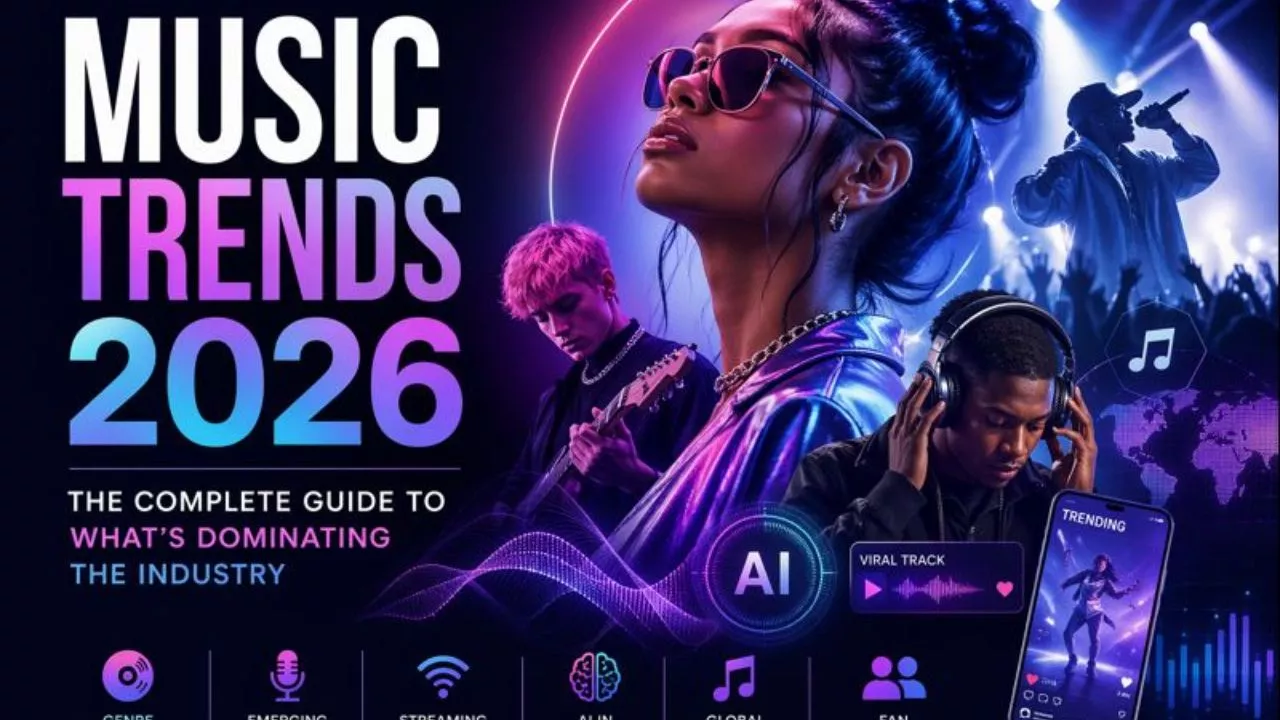
Something fundamentally different is happening in the music world right now. The year 2026 is not just another chapter in the streaming era — it is a pivotal turning point where technology, emotion, nostalgia, and global culture are colliding in entirely new ways. Whether you are a casual listener, an independent artist, a content creator, or a music industry professional, understanding the forces reshaping the sonic landscape has never been more important.
Google Trends data confirms what industry insiders have been saying for months: music consumption patterns have shifted dramatically. Searches for AI music production tools have surged by over 28,000% in five years. Lossless audio streaming has gone from a niche audiophile demand to a mainstream expectation. And genre labels — once the backbone of playlist curation — are giving way to something far more nuanced: moods, emotions, and vibes.
This in-depth guide breaks down every major music trend defining 2026, backed by real search data, streaming analytics, and insights from industry leaders. Bookmark this page — it is your complete resource for everything happening in music right now.
1. AI as a Creative Co-Pilot in Music Production
The single most transformative force in the music industry this year is Artificial Intelligence. But not in the way many feared. Rather than replacing artists, AI has evolved into what Billboard Power 100 executives are calling a creative co-pilot — a tool that handles technically complex tasks while human artists bring the soul, the story, and the emotion.
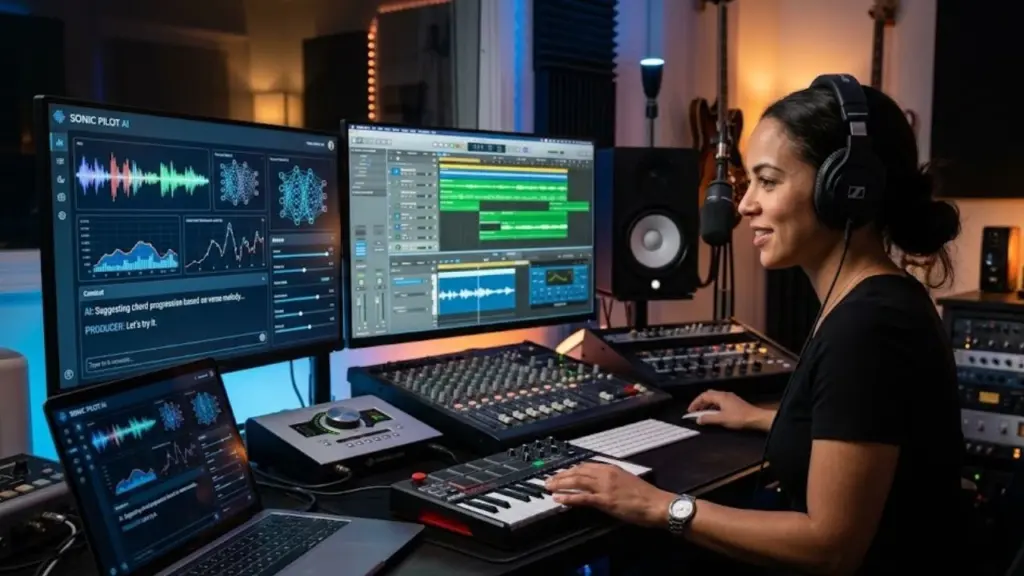
Approximately 25% of music producers now use AI tools as part of their standard workflow — primarily for stem separation, audio mastering, and melody generation. Platforms powered by advanced generative models allow even hobbyist creators to produce professional-quality tracks without traditional music training. Google’s MusicLM, which enables text-to-music generation with high fidelity, has particularly democratized music creation for non-musicians.
What makes 2026 stand apart from previous years is the maturity of this human-AI collaboration. The industry has largely moved past the “AI versus human music” debate. A new category — often called AI Virtuoso compositions — blends neural synthesis for technically complex musical theory with authentic human performance for emotional depth. These hybrid productions are dominating focus playlists, study music channels, film scoring libraries, and commercial advertising soundtracks globally.
For content creators, brands, and independent filmmakers, AI music tools are proving especially valuable. Custom soundtracks can now be generated instantly and delivered royalty-free, tailored to specific moods, tempos, and emotional arcs. This is fueling a massive commercial music licensing market growing at double-digit rates annually.
Key Stat: AI-generated music tool searches grew by +28,362% over five years. The demand for accessible, affordable, and customizable music production solutions has never been higher.
2. Top Music Genres Trending Right Now
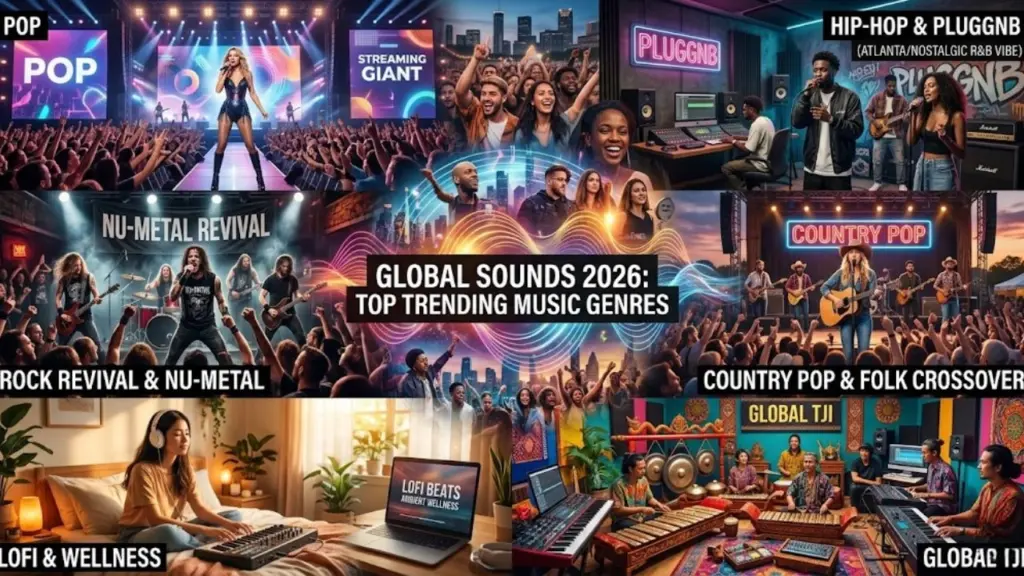
Genre popularity in 2026 cannot be understood through traditional chart logic alone. Streaming algorithms, short-form video platforms, and global cross-cultural exchange are all rewriting the rules. Here is what is actually dominating listening sessions worldwide right now.
Pop Music — Still the Undisputed Champion
Pop music remains the global frontrunner across every major streaming platform. Its extraordinary adaptability — blending elements from electronic production, R&B, indie aesthetics, and folk influences — keeps it perpetually relevant. Taylor Swift has surpassed 118 billion global streams, an unprecedented milestone that underscores pop’s commercial dominance. TikTok-driven remix culture and AI-assisted personalization continue to push pop music to new audiences constantly.
Hip-Hop, Trap and PluggnB
Hip-hop continues to hold its ground as one of the most culturally influential genres on the planet. Within hip-hop, a fascinating micro-genre called PluggnB is gaining serious mainstream traction. Combining plugg — a dreamy, laid-back trap subgenre — with nostalgic 1990s R&B melodies, PluggnB delivers a sound that feels simultaneously retro and cutting-edge. Artists like Lil Uzi Vert have helped push this nano-genre into mainstream consciousness, and search volume for related content is climbing rapidly across platforms.
Rock and Nu-Metal Revival
Rock music is staging a genuine, data-backed comeback. Nu-metal bands such as Deftones, Limp Bizkit, and Korn are experiencing extraordinary second winds — not as nostalgia acts, but as artists discovering entirely new fanbases through TikTok virality. Pollstar data confirms that rock and metal tours now rank among the highest-grossing live music events worldwide. Simultaneously, indie rock and alt-rock are thriving in the streaming world, prized for their raw production aesthetics and authentic emotional storytelling.
Country Pop and Folk Crossover
Country music is no longer confined to a regional American audience. The post-Beyonce “Cowboy Carter” cultural moment has permanently shifted country into global pop territory. Modern country combines heartfelt lyrical storytelling with crisp electronic production and radio-friendly pop hooks, attracting both traditional country listeners and urban audiences who previously had little interest in the genre. This crossover is one of the most commercially significant genre shifts of the decade.
Lofi, Ambient and Wellness Music
The lofi and ambient genres continue their remarkable growth trajectory, driven by the global wellness movement and the normalization of remote work. Millions of listeners rely on calming, non-intrusive soundscapes for focus, meditation, and sleep. Dedicated lofi channels on YouTube and Spotify generate hundreds of millions of monthly streams, and creators building content in the mental health and productivity space depend heavily on this genre.
3. The Rise of Hybrid and Genre-Blending Sounds
If there is one defining characteristic of music in 2026, it is the deliberate collapse of genre boundaries. Artists, producers, and AI platforms are embracing what the industry is calling maximalist hybridization — layering African rhythms over electronic basslines, blending classical orchestration with trap beats, or fusing folk vocals with ambient synth pads into something entirely new.
This trend is quantifiable. Searches for fusion music have climbed 45% in recent months, while maximalism in stock music production has surged dramatically. Hybrid sounds perform better across a wider range of content types — from TikTok edits and Instagram Reels to cinematic brand videos and interactive game audio — giving artists and producers a powerful commercial incentive to experiment across styles.
Traditional genre boundaries will continue dissolving as streaming algorithms increasingly reward unique sonic combinations over pure genre conformity. The most successful artists in 2026 are the ones building tracks flexible enough to shift roles, moods, and meanings depending on where they are used.
4. Lossless Audio and the Fidelity Revolution
After years of building toward this moment, lossless audio streaming has officially gone mainstream. In late 2025, Spotify rolled out lossless streaming at up to 24-bit/44.1 kHz FLAC quality for Premium subscribers across more than 50 markets — putting it on par with Apple Music, Amazon Music, and TIDAL, which had offered lossless options for years.
For audiophiles and music professionals, this is a watershed development. Compressed streaming formats strip away significant sonic detail; lossless delivery restores the full richness that artists and producers originally intended. The shift points to a deeper cultural movement: a growing desire for quality and intentionality in music consumption, as a direct reaction against years of convenience-first, quantity-over-quality streaming culture.
For brands selling premium headphones, wired audio equipment, and high-end speakers, this trend represents a major commercial opportunity — and explains why lossless audio is one of the highest-CPC keyword categories in music-related digital advertising right now.
5. Mood-Based Listening and Emotional Playlists
One of the subtler but most profound shifts in music consumption is the move toward emotion-first, genre-second curation. In 2026, Spotify and other platforms are leaning heavily into mood-based playlist structures, creating collections around emotional states — nostalgic optimism, cinematic dark, productive calm — rather than traditional genre labels.
This reflects a fundamental change in how listeners relate to music today. It is less about musical identity and more about functional and emotional need. AI-powered recommendation systems have supercharged this trend, training listeners to think in emotional terms and discover new artists they would never have encountered through conventional genre-based browsing.
For artists and independent musicians, this creates a powerful opportunity. While AI can technically replicate emotional tones, listeners increasingly demonstrate a refined ability to detect genuine human emotion in music — creating a premium market for authentic, emotionally resonant songwriting that algorithms alone cannot manufacture.
6. Physical Music Revival: Vinyl, CDs and Cassettes
In an era of infinite digital access, physical music formats are experiencing a genuine cultural renaissance. Vinyl records have maintained their beloved collector status, but the surprising story of 2026 is the unexpected resurgence of CDs and cassettes among Gen Z and Gen Alpha audiences.
Young listeners are diving into bargain bins and specialty record stores — not purely for nostalgia, but for the tangible, personal connection that physical media offers in an otherwise ephemeral digital world. Limited-edition releases, artist-signed copies, and exclusive physical pressings are increasingly treated as collectible emotional artifacts — objects that carry meaning beyond their sonic content.
Similarly, acoustic and handcrafted instruments — particularly the handpan, which produces a resonant, deeply human sound — are growing in popularity among both professional musicians and casual enthusiasts. The handpan represents a broader cultural craving for organic, tactile musical experiences in a world saturated with screens and algorithms.
7. Global Sounds Going Mainstream
Perhaps the most exciting trend of 2026 is the accelerating globalization of musical influence. Afrobeats, Amapiano, and Afro House saw an eightfold increase in production sample downloads in recent years — a direct reflection of these genres’ explosive commercial success worldwide. Artists from Nigeria, South Africa, and Ghana are now regularly charting on global Top 40 lists and influencing the sound palette of mainstream Western pop music.
Simultaneously, Afrofuturism — a genre blending traditional African instrumentation with sophisticated electronic production — is gaining significant critical and commercial recognition. Grammy-winning collaborations in this space are pushing Afrofuturist sounds into the cultural mainstream at an accelerating pace.
Latin music’s global influence continues to grow as well. Reggaeton rhythms and Latin trap collaborations are now staples of international pop playlists, driven by artists like Bad Bunny, Anitta, and Feid who have built genuinely global audiences through strategic streaming and social media presence.
8. Music Trends 2026 — Quick Snapshot
| Trend | Status | Key Drivers | Who It Impacts Most |
|---|---|---|---|
| AI Music Production | Hot | Generative AI, accessibility tools | Producers, creators, brands |
| PluggnB / Nano-Genres | Rising | TikTok virality, micro-communities | Hip-hop fans, indie artists |
| Nu-Metal Revival | Hot | Nostalgia, TikTok rediscovery | Rock fans, live music sector |
| Lossless Audio Streaming | Rising | Spotify FLAC rollout, audiophile demand | Subscribers, hardware brands |
| Mood-Based Playlists | Established | AI personalization, wellness culture | All listeners, curators |
| Afrobeats / Afrofuturism | Hot | Global streaming, Grammy recognition | International fans, major labels |
| Country Pop Crossover | Established | Beyonce effect, mainstream adoption | Traditional and pop audiences |
| Vinyl / CD / Cassette Revival | Rising | Gen Z collector culture | Physical retail, indie artists |
| Lofi and Wellness Music | Established | Remote work, mental health awareness | Study and productivity audiences |
| Hybrid Genre-Blending | Hot | Algorithm rewards, global tools | Artists, sync licensing, brands |
Frequently Asked Questions
What is the biggest music trend of 2026?
The single biggest trend is the mainstream adoption of AI as a creative co-pilot in music production. AI tools now assist with everything from melody generation and stem separation to mastering and royalty-free soundtrack creation. Alongside AI, the collapse of traditional genre boundaries — with artists blending sounds from multiple cultures and styles — is redefining what popular music sounds like in 2026.
Is AI-generated music legal and commercially viable?
AI-generated music occupies a complex legal space that varies by jurisdiction. However, many AI music platforms operate with built-in licensing frameworks that make the resulting music commercially usable — particularly for content creators, brands, and advertising campaigns. Legal standards are rapidly evolving, and creators should always verify the specific licensing terms of any AI music tool before deploying tracks commercially.
What music genres have the highest CPC in digital advertising?
In digital advertising, music-related keywords with the highest CPC typically cluster around music streaming services, music production software, online music education, lossless audio equipment, and music licensing platforms. Genres tied to high-value commercial audiences — such as classical, jazz, and premium pop — tend to command higher advertising rates due to their association with affluent, brand-conscious demographics.
Why is lossless audio becoming popular in 2026?
Spotify’s rollout of FLAC-quality lossless streaming in late 2025 brought high-fidelity audio to tens of millions of mainstream listeners for the first time. Combined with growing audiophile culture, improved headphone hardware accessibility, and a cultural reaction against low-quality compressed media, lossless audio is now seen as the natural next step in the streaming evolution.
What is PluggnB and why is it trending?
PluggnB is a micro-genre that blends plugg — a soft, dreamy subgenre of trap music — with the lush, melodic sensibility of 1990s R&B. It is trending because niche genre specificity generates strong community engagement and viral discovery potential on platforms like TikTok and Instagram Reels.
How is Afrobeats influencing global music in 2026?
Afrobeats and its sub-genres — including Amapiano and Afro House — have achieved remarkable global penetration. Production sample downloads from African music genres grew eightfold in recent years, and artists from Nigeria, South Africa, and Ghana are now regularly appearing on global Top 40 charts. The sound’s rhythmic complexity and innovative production techniques are influencing pop, electronic, and country music producers worldwide.
Is physical music like vinyl and CDs still worth buying in 2026?
Absolutely. Beyond the sonic arguments — many audiophiles maintain that vinyl delivers a warmer, more analog sound quality than digital formats — physical music has acquired significant cultural and emotional value. Limited-edition releases, artist-signed copies, and exclusive physical pressings are increasingly collectible items that digital streaming simply cannot replicate.
Final Thoughts
Music in 2026 is not just evolving — it is expanding in every direction simultaneously. Technology is democratizing music creation while human authenticity is becoming more prized than ever. Global sounds are finding mainstream audiences while physical formats are reclaiming emotional relevance. AI tools are empowering creators while listeners are demanding higher quality, more emotional, and more intentional musical experiences.
For listeners, this is an extraordinary time to explore new sounds and genres. For artists, it is a moment of unprecedented opportunity to reach global audiences without traditional gatekeepers. And for music industry professionals and digital content creators, understanding and acting on these trends is the difference between staying relevant and being left behind.
Riya has spent six years writing about music. At OST Vibes she covers soundtracks for film, series and games — who scored what, what is actually on each official release, and where to listen to it. Her focus is English-language pop and screen music. Spot a mistake in a tracklist or a credit? Email [email protected] and it will be corrected.